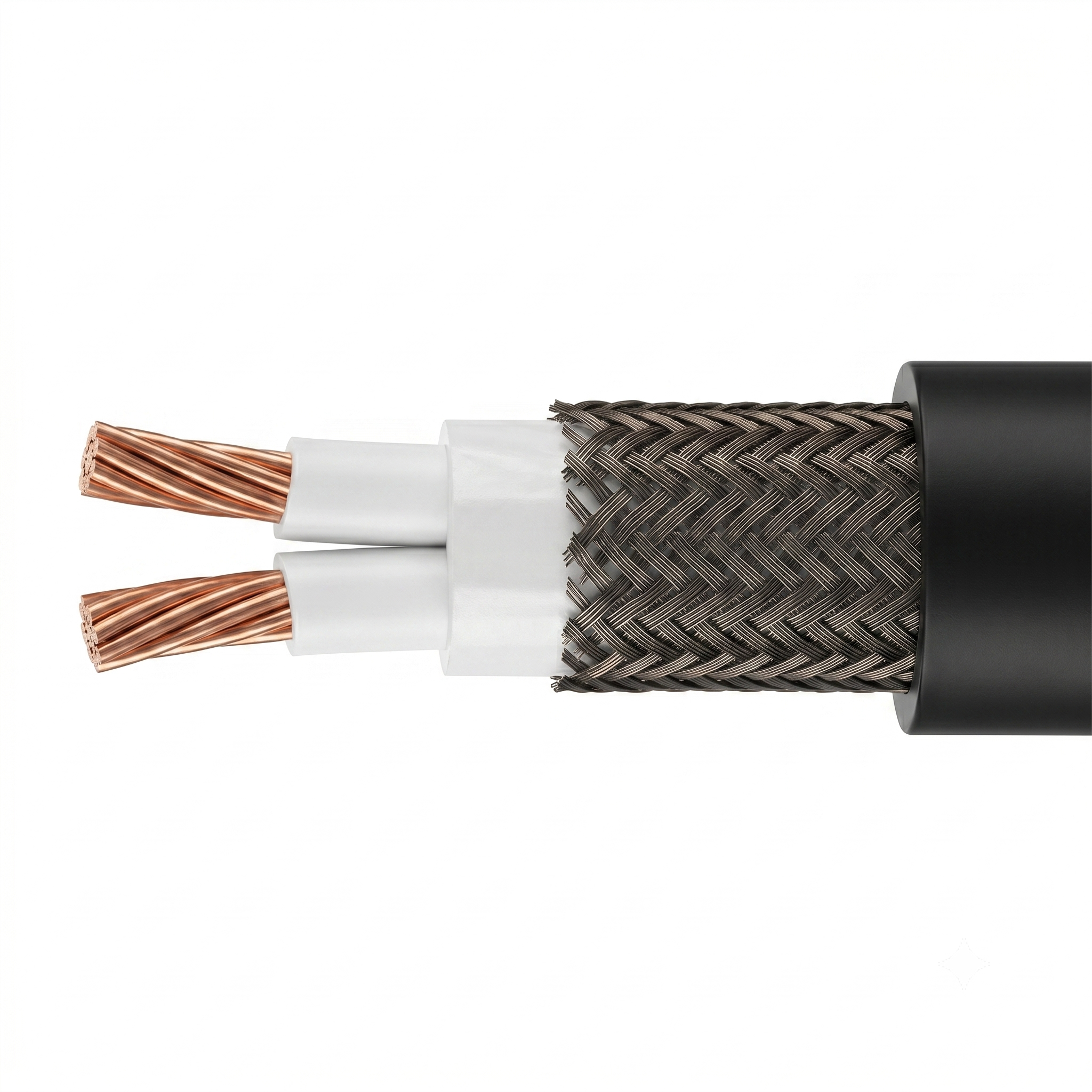
LVDS Balanced Twisted Pair Wire
LVDS balanced twisted pair wire is designed for low-voltage differential signal and digital signal transmission in spacecraft, remote sensing satellites, small satellites, and related aerospace systems. With lightweight construction, compact size, good flexibility, low attenuation, strong interference resistance, and 100Ω characteristic impedance, it supports reliable LVDS signal transmission under demanding environments.
100Ω Impedance
200V AC Rated
Satellite Signal Transmission
Overview
LVDS Balanced Twisted Pair Wire is designed for low-voltage differential signal and digital signal transmission in spacecraft, remote sensing satellites, small satellites, and related aerospace systems.
This product series features lightweight construction, compact size, good flexibility, high transmission quality, strong interference resistance, low attenuation, chemical corrosion resistance, moisture resistance, and resistance to acids, alkalis, oils, and other solvents. It is suitable for reliable LVDS signal transmission in demanding aerospace and harsh-environment applications.
This page is intended for product selection. Exact specifications should be confirmed by selected AWG size, nominal cross-section, conductor structure, impedance requirement, attenuation test frequency, operating environment, and project standard before ordering.
Series Options
The table below helps buyers compare the available LVDS balanced twisted pair wire sizes before reviewing detailed drawings or datasheets.
| Series Option | Product Positioning | Typical Selection Scenario |
|---|---|---|
| LVDS-100-30 | 30 AWG lightweight LVDS balanced twisted pair wire | For compact satellite and aerospace signal wiring where minimum size and low weight are important. |
| LVDS-100-28 | 28 AWG LVDS balanced twisted pair wire | For small-size LVDS signal transmission where compact routing and signal stability are required. |
| LVDS-100-26 | 26 AWG LVDS balanced twisted pair wire | For balanced performance between size, conductor resistance, and signal transmission requirements. |
| LVDS-100-24 | 24 AWG LVDS balanced twisted pair wire | For applications requiring lower attenuation and larger conductor size than smaller AWG options. |
| LVDS-100-22 | 22 AWG LVDS balanced twisted pair wire | For LVDS or digital signal transmission where lower attenuation and larger conductor cross-section are preferred. |
| BYC Custom | Custom LVDS balanced twisted pair wire | For projects requiring custom impedance, attenuation testing at specific frequencies, conductor size, jacket material, or documentation support. |
Features
LVDS Signal Transmission
Designed for low-voltage differential signal and digital signal transmission in aerospace and satellite systems.
100Ω Characteristic Impedance
Standard constructions use 100Ω characteristic impedance, with other impedance options available based on customer requirements.
Lightweight and Compact
Small outside diameter and lightweight construction support space-limited wiring in spacecraft and satellite applications.
Low Attenuation
Representative attenuation values are provided at 10MHz, 20MHz, and 100MHz for preliminary signal transmission evaluation.
Harsh-Environment Resistance
Designed for resistance to moisture, chemical corrosion, acids, alkalis, oils, and other solvents in demanding environments.
Custom Testing Support
BYC Cables can review custom impedance requirements and test attenuation at specific frequencies based on project needs.
Construction & Materials
This LVDS balanced twisted pair wire is available in multiple AWG sizes and conductor constructions. Final construction should be selected according to impedance requirement, attenuation target, cable outside diameter, flexibility, installation space, and operating environment.
Construction Options
| Component | Available Options | Selection Notes |
|---|---|---|
| Conductor Size | 30 AWG, 28 AWG, 26 AWG, 24 AWG, or 22 AWG | Conductor size affects outside diameter, attenuation, conductor resistance, and installation flexibility. |
| Nominal Cross-Section | 0.06 mm², 0.08 mm², 0.14 mm², 0.20 mm², or 0.35 mm² | Cross-section should be selected according to signal distance, attenuation requirement, and project layout. |
| Conductor Structure | 7/0.102, 7/0.126, 7/0.16, 19/0.12, or 19/0.16 | Stranding structure affects flexibility, conductor diameter, and mechanical performance. |
| Twisted Pair Structure | Balanced twisted pair construction | Supports LVDS and digital signal transmission where pair balance and impedance stability are important. |
| Characteristic Impedance | Standard 100Ω; other impedance options available by request | Custom impedance should be confirmed according to system signal requirements. |
| Attenuation Testing | Representative data at 10MHz, 20MHz, and 100MHz; other frequency points available by request | BYC Cables can test attenuation at customer-specified frequency points. |
| Material System | Insulation and jacket materials should be confirmed by selected construction and project requirements | Material selection should consider temperature, moisture, chemical exposure, flexibility, and aerospace requirements. |
Size and Signal Performance Options
| Model | AWG | Nominal Cross-Section | Conductor Structure | Max. Cable OD | Attenuation at 100MHz |
|---|---|---|---|---|---|
| LVDS-100-30 | 30 | 0.06 mm² | 7/0.102 | 2.2 mm | 54 dB/m |
| LVDS-100-28 | 28 | 0.08 mm² | 7/0.126 | 2.8 mm | 43 dB/m |
| LVDS-100-26 | 26 | 0.14 mm² | 7/0.16 | 3.1 mm | 36 dB/m |
| LVDS-100-24 | 24 | 0.20 mm² | 19/0.12 | 4.3 mm | 25 dB/m |
| LVDS-100-22 | 22 | 0.35 mm² | 19/0.16 | 5.2 mm | 20 dB/m |
Specifications
The specifications below are intended for preliminary product selection. Final values should be confirmed according to selected model, conductor size, impedance requirement, attenuation test frequency, and project standard.
| Product Family | LVDS Balanced Twisted Pair Wire |
|---|---|
| Application | Low-voltage differential signal and digital signal transmission for spacecraft, satellites, and related aerospace systems |
| Rated Voltage | 200V AC and below |
| Rated Operating Temperature | -65°C to +180°C (-85°F to +356°F) |
| Extended Low-Temperature Review | Selected LVDS signal transmission applications may be reviewed for conditions down to -80°C (-112°F) based on project requirements. |
| Cutoff Frequency | 100MHz |
| Minimum Bending Radius | 20mm |
| Relative Humidity | Not greater than 98% at +40°C (+104°F) |
| Characteristic Impedance | 100Ω standard; other impedance options can be produced according to customer requirements |
| AWG Options | 30 AWG, 28 AWG, 26 AWG, 24 AWG, 22 AWG |
| Nominal Cross-Section | 0.06 mm², 0.08 mm², 0.14 mm², 0.20 mm², 0.35 mm² |
| Maximum Cable Outside Diameter | 2.2 mm to 5.2 mm depending on selected model |
| Capacitance, Conductor to Conductor | 47 pF/m |
| Capacitance, Conductor to Sheath | 79 pF/m |
| Customization | Custom impedance and attenuation testing at specific frequency points are available based on customer requirements |
For accurate quotation, please provide the required AWG size, impedance, cable outside diameter requirement, attenuation frequency point, operating temperature, application environment, and applicable drawings or specifications.
Representative Attenuation Data
| Model | AWG | 10MHz | 20MHz | 100MHz | Characteristic Impedance |
|---|---|---|---|---|---|
| LVDS-100-30 | 30 | 18 dB/m | 25 dB/m | 54 dB/m | 100Ω |
| LVDS-100-28 | 28 | 15 dB/m | 20 dB/m | 43 dB/m | 100Ω |
| LVDS-100-26 | 26 | 13 dB/m | 17 dB/m | 36 dB/m | 100Ω |
| LVDS-100-24 | 24 | 8 dB/m | 11 dB/m | 25 dB/m | 100Ω |
| LVDS-100-22 | 22 | 7 dB/m | 9 dB/m | 20 dB/m | 100Ω |
Applications
LVDS balanced twisted pair wire is suitable for aerospace systems and electronic equipment that require stable low-voltage differential signal transmission, low attenuation, compact size, and reliable performance in demanding environments.
Remote Sensing Satellites
For low-voltage differential signal and digital signal transmission in remote sensing satellite systems.
Small Satellites
For compact satellite platforms where lightweight, small-size, and stable signal transmission are important.
Spacecraft Signal Wiring
For spacecraft and related aerospace systems requiring balanced twisted pair construction and reliable digital signal performance.
Harsh-Environment Electronics
For electronic equipment exposed to moisture, chemicals, temperature variation, or limited installation space.
Selection Guide
Use this guide as a starting point. Final selection should be confirmed by AWG size, attenuation requirement, impedance, outside diameter, signal frequency, installation space, and project specification.
| Requirement | Recommended Option | Selection Reason |
|---|---|---|
| Smallest and lightest LVDS wiring | LVDS-100-30 | 30 AWG construction provides the smallest listed cable outside diameter for compact aerospace wiring. |
| Balanced compact signal wiring | LVDS-100-28 / 26 | 28 AWG and 26 AWG options balance size, signal performance, and routing flexibility. |
| Lower attenuation requirement | LVDS-100-24 / 22 | 24 AWG and 22 AWG options provide lower representative attenuation at 100MHz. |
| Standard LVDS impedance | 100Ω | Standard constructions are designed with 100Ω characteristic impedance for LVDS signal transmission. |
| Non-standard impedance requirement | BYC Custom | Other characteristic impedance options can be produced based on customer requirements. |
| Specific frequency-point attenuation test | Custom Testing | BYC Cables can test cable attenuation at customer-specified frequency points. |
Customization Options
BYC Cables can support custom LVDS balanced twisted pair wire requirements based on drawings, samples, impedance requirements, and signal performance needs.
AWG Size
30 AWG, 28 AWG, 26 AWG, 24 AWG, and 22 AWG options can be reviewed according to signal distance, attenuation, and size requirements.
Characteristic Impedance
Standard 100Ω constructions are available, and other impedance options can be produced based on customer requirements.
Attenuation Testing
Attenuation can be tested at customer-specified frequency points to support project validation and signal performance review.
Outside Diameter
Cable outside diameter can be reviewed according to selected AWG size, installation space, and routing requirement.
Material Review
Insulation and jacket materials can be reviewed based on temperature, moisture, chemical exposure, flexibility, and aerospace requirements.
Technical Documentation
Datasheets, drawings, attenuation data, and technical confirmation can be provided based on project requirements.
Request a Quote
Please provide the required AWG size, characteristic impedance, attenuation frequency point, outside diameter requirement, operating temperature, application environment, and applicable drawings or specifications.
FAQ
What is LVDS balanced twisted pair wire used for?
It is used for low-voltage differential signal and digital signal transmission in spacecraft, remote sensing satellites, small satellites, and related aerospace systems.
What is the characteristic impedance of this LVDS wire?
The standard characteristic impedance is 100Ω. Other impedance options can be produced based on customer requirements.
What AWG sizes are available?
Available standard options include 30 AWG, 28 AWG, 26 AWG, 24 AWG, and 22 AWG.
What is the operating temperature range?
The rated operating temperature is -65°C to +180°C (-85°F to +356°F). Selected LVDS signal transmission applications may be reviewed for conditions down to -80°C (-112°F) based on project requirements.
Can BYC Cables test attenuation at a specific frequency?
Yes. BYC Cables can test cable attenuation at customer-specified frequency points based on project requirements.
What information should I provide for quotation?
Please provide the AWG size, characteristic impedance, attenuation frequency point, cable outside diameter requirement, operating environment, and any drawings or technical specifications.
contact us
STEP 1
Inquiry Received
-
Instant acknowledgment and
dedicated specialist assignment.
STEP 2
Technical Review
-
Expert evaluation of specifications
for optimal reliability.
STEP 3
24H Response
-
Comprehensive proposal and
competitive pricing within 24 hours.